Be Direct with Message

Screen Shot 2016-02-25 at 9.17.56 AM

All writing is storytelling, whether it’s a quick email or a memo or a longer report. How we open a story is critical to engaging the reader because we compete for the reader’s limited time.

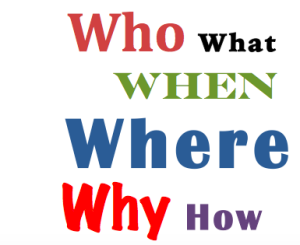
Journalists are taught to think in terms of the 5 Ws and an H. Who, What, When, Where, Why and How. One of those elements is always the most important of the story, or the lead, and the dominant element changes depending on the essence of the story. The remaining elements need to be addressed as early in the narrative as practical so we don’t lose the reader.

Let’s consider a lead paragraph like this, which is the beginning of a story to pitch a product:

Before you run an errand in your car next time, wouldn’t you like to know that along the way there would be no traffic, no dawdling drivers, no orange cones, and no stop signs slowing you down from completing your appointed tasks? Being able to move through life, including work life, without diversions, distractions and barriers would be a happy life indeed.

At this point, 62 words in, the reader is not sure what the story is about, nor why it should be of interest to them. And, as we’ve discussed in previous posts, the reader never comes to a narrative expecting to be questioned, particularly in the lead sentence.

The narrative continues: But, unfortunately, the road we travel is typically filled with unexpected delays and detours to slow us down, and that includes the road to getting better marketing results.

This type of opening falls into the category of creating a metaphorical or scene set to introduce the story. Such a literary device has its use and place in healthy writing. But, too many writers use (and overuse) it routinely believing it makes the narrative more friendly, inviting and approachable. The problem in the quick click world of online is whether the reader will hang around long enough to get to the essence of the story. The move-on mentality of the reader extends to print as well.

By contrast, let’s take a look at the lead paragraph of a story published in Becker’s Hospital Review:

IBM Watson Health plans to acquire Truven Health Analytics for $2.6 billion, a deal which upon completion will aggregate health-related data of approximately 300 million patient lives.

The Who and What of the story are answered immediately in the first 28 words of narrative engagement. We also find out How much and How many. The reader could quit reading at this point and have a complete story. Those who want more could read on to learn When, Where and Why. The point of any narrative is to deliver the message as powerfully and efficiently as possible.

More importantly, the way we tell our narratives communicates a message to the reader about our brand, personal or corporate. Are we focused? Is our story compelling enough to command the reader’s time? Are we overloaded with jargon and fluff? Is the narrative authoritative? Does our writing tone align with the identity we want to project?

In our experience, a focus on healthy writing as a strategy is rarely something we spend enough time on. In marketing we invest considerable time, energy and money in developing the look and feel of our brand, but precious little time on the strategic thinking, writing, editing and reworking of the accompanying words. Weak narratives can lose the reader and undermine the brand regardless of how interesting our artwork, design or logo might be.

We all have personal brands as well and our professional credibility is published daily in our emails, memos and reports. Like our wardrobe, writing is an outward expression that communicates a powerful message about us by style and substance. How do you and your team look?


Be Careful with Questions

HW - Question Mark Art

The advertisement for the hospital began with the prominent headline: Is It Possible to Transform the Way Emergency Care is Delivered?

The first two sentences of the narrative copy asked: What if emergency care were designed around you? What if all the different steps typically encountered in the emergency department could be streamlined?

Then the narrative shifts to its answers: That’s just what we’ve done… at our newly expanded facility… we’ve transformed the entire process… when you arrive you’ll be greeted by a nurse then typically brought directly to the patient care area… met by your own care team… with our state-of-the-art diagnostic testing… we offer some of the most advanced… world-class emergency care designed around you…

The general rule in writing for the reader is to use questions sparingly. The first problem is the reader never comes to a narrative expecting to be asked to do the work of answering questions. The reader asks the questions of the narrative. The second is that questions set up expectations that the reader will find compelling answers somewhere in the narrative. If the narrative answers fall short, the message fails.

The late Donald Murray was a journalist, writing coach and author. In his book, “Read to Write,” he writes: “Each piece of effective writing may be described as a conversation between the reader and writer, in which the writer anticipates the reader’s questions and answers them just before they are asked.”

In the online world of quick click and move, this advice becomes more important. We usually have just a few seconds of the reader’s time to get them engaged.

In the advertising example above, once the questions create the expectation, the narrative itself is weak on answers. We speak of the newly expanded facility, which is not specific and not particularly transformational. We are greeted by a nurse and met by your own care team. That is what usually happens at a hospital emergency department. Our treatment is state-of-the-art and most advanced and world-class. None of these terms are specific in answering the questions the ad posed.

The question is a legitimate literary device that has a place in writing. But, use or overuse of the question runs the risk of alienating the reader. And, if we choose to use the question, a powerful and specific narrative answer should follow.


Pruning Dead Wood

Tree

One of the most common problems in writing, or speaking, is the addition of unnecessary words to a primary thought. Think of the overall narrative as a well-rooted tree trunk with strong branches and offshoots shaping the essence of the tree. Sometimes we need to prune unruly sprouts to keep the tree healthy and balanced.

The same is true with writing. Some of the most common unruly sprouts involve adding buzzwords or learned phrases that we believe align our writing to the corporate way or to a higher level of formality or intellectual appearance. But, instead, those additions make the writing less accessible and readable.

For example, let’s look at the following sentence that we could easily envision in a corporate memo or letter: In order to ensure compliance with the directive, I can assure you that we have taken the necessary steps to achieve the goal.

 The essence of the sentence is found once we apply the pruning sheers: We have taken steps to ensure compliance with the directive. The sentence is direct, authoritative and declarative, which is what we want but failed to achieve with our added pomp and circumstance. I can assure you adds no impact to the declaration we have taken steps. Necessary is wholly unnecessary. The completely overused phrase in order to should just be banished from our writing altogether. We can simply drop the redundant to achieve the goal.

And, for those of you paying attention, the words wholly, completely, just and simply in my previous three sentences can be dropped.

So, our pruning took a 23-word sentence and reduced it to 10 words. This improves readability and impact. We eliminated an introductory clause and a comma, and went straight to the point. In a memo or email with dozens of sentences, the overall impact on the reader is significant.

Most of us know how to do this and it requires no special knowledge of grammar or the technical aspects of writing. What is required is a just a little extra time to think about what we really want to say. Spending that time is much more impressive to our readers than sending our rough drafts to them.

Before Taking a Word Trip

Road to Better Writing

How to think about organizing the story is typically one of the most intimidating challenges we hear from writers.

A good metaphor is to think about taking a car trip. We don’t just get in and drive aimlessly. Usually, we have a purpose around why we need to drive. And, we map out in our mind what route we might take to get to where we need to go – leave the driveway, turn right on Main, go down to Broadway, turn left on Third, and there is the store. This happens quickly in the subconscious. Some of our routes are so automatic we may not realize that we are mapping in our brain.

This metaphor has value in thinking about writing, or taking a word trip. And, the practice can become just as subconscious and quick if we spend a little time developing the skills.

Concept:  Our first step is to think about the idea we want to communicate, the audience members who will receive it, and the purpose why we think we need to share it.

Content:  What is the primary message we need to convey? What other information do we need to communicate to illuminate the message?

Construction:  What form, tone and style do we need for this particular message? Is it playful? Serious? Just a point of information? Is it an email or a technical paper?

Correctness:  Once the piece is written, that is the time to focus on grammar. Never let fear of grammar interfere with the storytelling. Editing means to review what is written before we publish or press the send button on the email.

Context:  The content editing process is also when we check to make sure our writing clearly meets the purpose we had in mind. We check the story to see if it achieves the goal of getting us from where we start to where we want to end. Are we taking the reader or listener on a logical trip?

Idea. Audience. Purpose. Message. Form. Tone. Style. Grammar. Content editing. This is the basic map of organizing a story and taking a successful word trip.